HPA Axis Dysfunction Symptoms: What They Really Mean
Wired at midnight, wiped out by 3pm? HPA axis dysfunction symptoms are real — even though "adrenal fatigue" isn't. Here's what your cortisol is signaling.
On this page Read more
- The System That's Supposed to Wake You Up
- The HPA Axis Dysfunction Symptoms People Actually Describe
- Why "Adrenal Fatigue" Is the Wrong Name for a Real Problem
- What a Salivary Cortisol Test Can — and Can't — Tell You
- How to Fix HPA Axis Dysfunction: What Actually Helps
- When It's Adrenal Insufficiency, Not Adrenal Fatigue
- Where to Start
- Frequently Asked Questions
- References
Reading time: ~8 min | Last reviewed: August 2026
You almost fall asleep at your desk at three in the afternoon. By eleven at night you're wide awake, sorting out a cupboard, wondering what is wrong with you.
You've had the blood work. Thyroid, fine. Iron, fine. Vitamin D, borderline — "nothing to worry about." Someone suggested you try getting to bed earlier. (If that sounds familiar, explore why "normal" lab results don't always mean optimal.)
If that's your last two years in a paragraph, the phrase you've probably met online is adrenal fatigue. The better term is HPA axis dysfunction. And the symptoms of HPA axis dysfunction are real, measured, and far more interesting than "you're just stressed."
Let's look at what's actually going on.
This post is for educational purposes only. It isn't medical advice, and it isn't a substitute for working with a qualified practitioner.
The System That's Supposed to Wake You Up
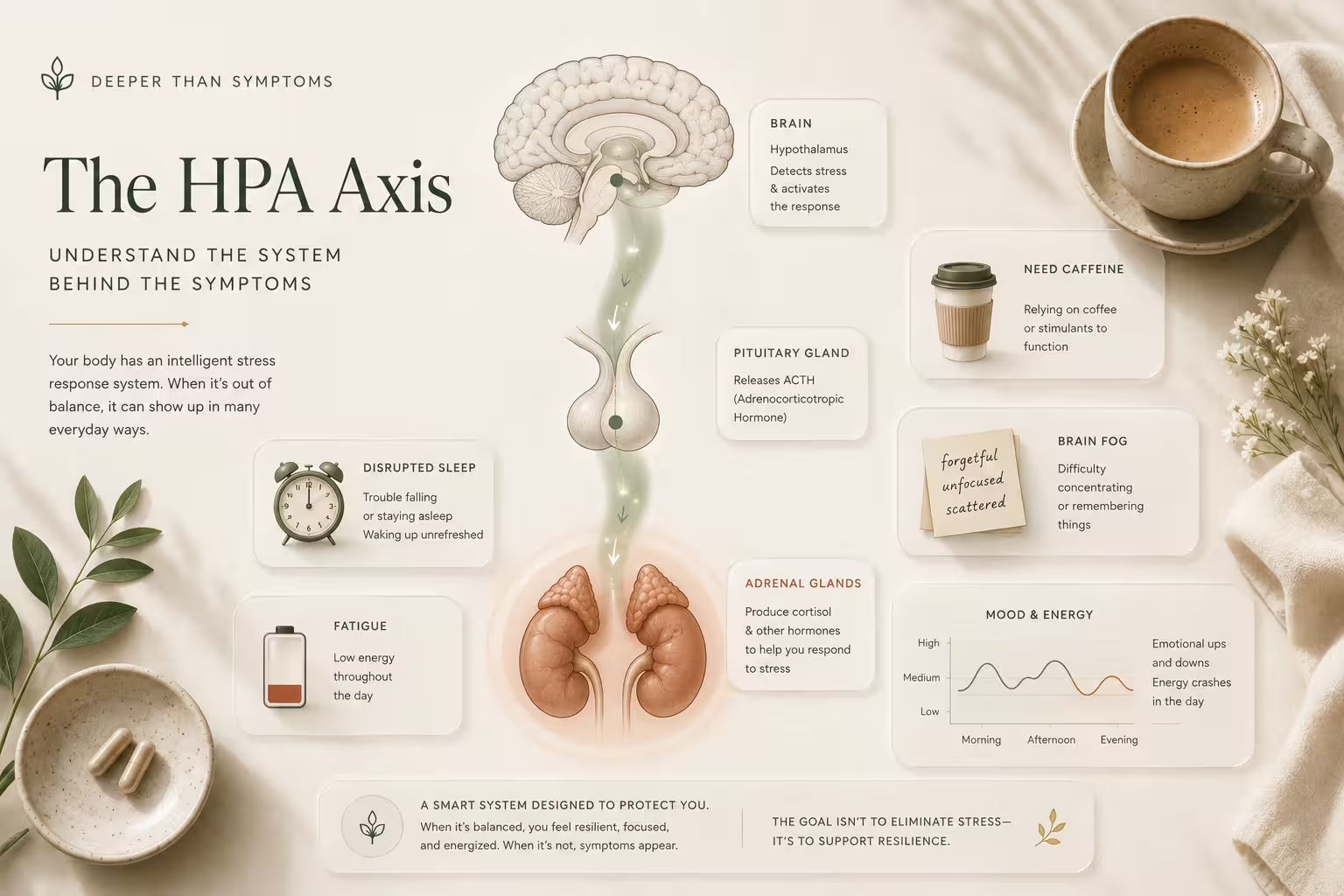
Your hypothalamic-pituitary-adrenal axis is a three-part relay.
Your hypothalamus sends out CRH. That tells your pituitary to send out ACTH. ACTH tells your adrenal glands to make cortisol. Then cortisol travels back up and tells the hypothalamus to stop. Job done, system off (Cleveland Clinic).
Here's the part most people miss. This isn't only an alarm system. Cortisol has a daily shape that dictates why you might be waking up exhausted.
It should rise sharply in the first 30 to 45 minutes after you wake. That rise is the cortisol awakening response. Then it should taper all day and bottom out near midnight, so melatonin can take over. That curve is your ignition and your off switch, in one hormone. A healthy hypothalamic-pituitary-adrenal axis holds that shape without you thinking about it.
Now stretch a chronic stress response over years, not a hard couple of weeks. The loop stops holding its shape. Chronic stress doesn't break the glands — it reshapes the signal. Cortisol levels can run high, go flat, or show up at the wrong hours. That's cortisol dysregulation, and it's the engine behind most HPA axis dysfunction symptoms.
Cortisol touches blood sugar, immune signaling, sleep, and mood. So when the rhythm goes, it shows up almost everywhere except where you'd think to look. Which is exactly why HPA axis dysregulation gets missed.
The HPA Axis Dysfunction Symptoms People Actually Describe
HPA axis dysfunction symptoms cluster around energy, sleep, and stress tolerance. The classic pattern is tired but wired. Heavy and foggy in the morning. Flat by mid-afternoon. Weirdly alert at midnight. No single symptom means much alone — the pattern is the signal.
The signs of HPA axis dysfunction that come up most often:
- Morning heaviness — you need 40 minutes and caffeine before you feel human
- The 3pm floor — energy drops out, and sugar or coffee is the only ladder back up
- A late second wind — you're sharpest between 9pm and midnight
- Unrefreshing sleep — eight hours, and you wake as tired as you went to bed
- A short fuse for stress — small things land hard, and you recover slowly
- Brain fog — words go missing, focus won't hold
- Salt or sugar cravings that feel physical, not habitual
- Catching everything — every office cold finds you, and lingers
Sound familiar? You're not imagining it. These signs of HPA axis dysfunction rarely arrive one at a time.
A 2025 review in the American Journal of Medicine named this exact set. Fatigue, insomnia, mood changes, poor stress tolerance — the symptoms standard care most often misses. Each one alone looks like everything else. Together, they look like HPA axis dysregulation.
The link between burnout and cortisol isn't hand-waving either. In one study of 197 police officers, higher exhaustion scores tracked with a flatter daily cortisol curve. Less rise. Less fall. Less rhythm. Measured, not imagined. Burnout and cortisol travel together, and the curve is where you see it (Comprehensive Psychoneuroendocrinology, 2020).
Why "Adrenal Fatigue" Is the Wrong Name for a Real Problem
Now the part most wellness blogs skip.
In 2016, two researchers screened 3,470 papers and analyzed 58 studies to ask one question. Is there evidence that adrenal fatigue exists? Their answer in a systematic review in BMC Endocrine Disorders was blunt. There isn't. The findings clashed. The testing methods weren't sound. The title says the rest: Adrenal fatigue does not exist.
So why does the term persist? Because it names a real experience, even though it gets the mechanism wrong — as we explore in our root cause guide to morning fatigue and cortisol.
Adrenal fatigue makes a specific claim: your adrenal glands are worn out and can't keep up. Healthy adrenal glands don't wear out from a stressful decade. That claim doesn't hold.
HPA axis dysregulation claims something different, and something the evidence supports far better. The signaling loses its rhythm. Not tired glands — a mistimed conversation. Cortisol dysregulation is the mechanism. Adrenal fatigue was only ever the folk name for it.
That difference matters. It changes what you'd sensibly do. You're not replacing a drained hormone. You're helping a feedback loop find its shape again.
Your HPA axis dysfunction symptoms were never the problem. The label was.
What a Salivary Cortisol Test Can — and Can't — Tell You
Testing for HPA axis dysfunction is where money gets wasted, so let's be careful.
A single morning blood draw gives you one number from one moment. A diurnal salivary cortisol test is different. Four to six samples across one day, showing the shape of your curve. That's why the 2025 review favors it for spotting functional patterns. Ask about your cortisol awakening response. Those first 30 minutes carry the most signal.
Useful. Not diagnostic. Hold onto that distinction.
Cortisol levels move with poor sleep, illness, travel, and whatever week you happen to be having. So a salivary cortisol test describes a pattern rather than proving a diagnosis. It measures cortisol levels, not certainty. Read it alongside your symptoms, not instead of them — and be wary of any panel sold with a matching supplement bundle attached.
How to Fix HPA Axis Dysfunction: What Actually Helps
So how do you fix HPA axis dysfunction? Slowly, and from the nervous system down.
Here's the good news. The thing with the strongest evidence behind it isn't a supplement.
A 2023 meta-analysis in Psychoneuroendocrinology pooled 58 randomized trials and 3,508 people. Stress management clearly shifted cortisol levels, with a medium overall effect. Mindfulness, meditation, and relaxation led the field. The effect was largest on cortisol awakening response measures — the marker that tends to go wrong first.
Translated: nervous system regulation isn't the soft option in the plan. It is the plan — and it directly links back to gut-brain signaling and digestive health.
Three places to start, in the order that tends to work:
- Anchor your light. Ten minutes of daylight within an hour of waking. Dimmer light after 9pm. Your body clock sets the cortisol curve, and the curve won't reset itself (a foundational principle in resetting morning energy levels).
- Practice recovery daily, not weekly. Ten minutes of breathwork most days beats a two-hour reset on Sunday. Nervous system regulation responds to consistency, not intensity.
- Eat before your body has to ask. Skipping breakfast and running on coffee makes your HPA axis do the job insulin should be doing.
What about adaptogens? A 2024 meta-analysis in Explore of nine randomized trials found ashwagandha lowered perceived stress and serum cortisol against placebo. Real, modest, worth knowing. Some people in those trials had side effects, and it interacts with thyroid and sleep medication. That's a talk with your practitioner, not a cart decision.
On timing: sleep and morning energy often shift somewhere between weeks two and six. Stress tolerance and brain fog usually take closer to three months. Anyone selling a 30-day adrenal reset is selling you a timeline your body never agreed to.
Healing isn't linear here. It rarely is.
When It's Adrenal Insufficiency, Not Adrenal Fatigue
Please don't skip this part. HPA axis dysfunction symptoms can look like something far more serious.
Adrenal insufficiency — Addison's disease — is rare, and it's dangerous. Here's the real distinction in adrenal insufficiency vs adrenal fatigue. One is a real endocrine condition with a proper blood test. The other is a marketing term.
Book an appointment this week if you have any of these:
- Weight loss you can't explain
- Low blood pressure, or dizziness when you stand
- Skin creases and scars going darker
- Nausea or vomiting that won't quit
- Salt cravings strong enough to feel odd
Those signs call for an ACTH stimulation test, not a lifestyle protocol. HPA axis dysregulation is a rhythm problem. This is a supply problem — cortisol levels really too low — and it needs a doctor.
Where to Start
Back to three in the afternoon.
That crash isn't a character flaw, and it isn't nothing. HPA axis dysfunction symptoms are a rhythm that lost its shape. It held too much, for too long. And rhythms, unlike broken parts, can be rebuilt.
That's the honest hope inside HPA axis dysfunction. Slower than you'd like. But real, and mostly in your hands.
Pick one thing this week. Daylight in your eyes within an hour of waking is the smallest lever with the longest reach.
Want to see your own curve before you change anything? The Cortisol Curve Tracker is a free 14-day log for energy, sleep, and stress — the baseline that makes everything after it readable.
Then tell me in the comments: which symptom would you most want to hand back first? That's usually where the work should start.
Frequently Asked Questions
What are the most common signs of HPA axis dysfunction?
Is HPA axis dysfunction the same as adrenal fatigue?
How do you test for HPA axis dysfunction?
Can HPA axis dysfunction cause weight gain?
How long does recovery from HPA axis dysfunction take?
This content is for educational purposes only and is not intended to diagnose, treat, cure, or prevent any disease. Always consult a qualified healthcare practitioner before making changes to your health regimen, supplements, or medication.
The Cortisol Curve Tracker
Download our free Cortisol Curve Tracker — a 14-day energy, sleep, and stress baseline log to bring to your next appointment.
Download PDF FreeReferences
- Ring M. An Integrative Approach to HPA Axis Dysfunction: From Recognition to Recovery. American Journal of Medicine. 2025;138(10):1451–1463. doi.org/10.1016/j.amjmed.2025.05.044
- Cadegiani FA, Kater CE. Adrenal fatigue does not exist: a systematic review. BMC Endocrine Disorders. 2016;16(1):48. doi.org/10.1186/s12902-016-0128-4
- Rogerson O, Wilding S, Prudenzi A, O'Connor DB. Effectiveness of stress management interventions to change cortisol levels: a systematic review and meta-analysis. Psychoneuroendocrinology. 2023;159:106415. doi.org/10.1016/j.psyneuen.2023.106415
- Arumugam V, Vijayakumar V, Balakrishnan A, et al. Effects of Ashwagandha (Withania somnifera) on stress and anxiety: A systematic review and meta-analysis. Explore. 2024;20(6):103062. doi.org/10.1016/j.explore.2024.103062
- McCanlies EC, Leppma M, Mnatsakanova A, et al. Associations of burnout with awakening and diurnal cortisol among police officers. Comprehensive Psychoneuroendocrinology. 2020;4:100016. doi.org/10.1016/j.cpnec.2020.100016
- Cleveland Clinic. Hypothalamic-Pituitary-Adrenal (HPA) Axis. my.clevelandclinic.org
Fact Checked By Dr. Prerana Suryawanshi, MBBS
This medical analysis has been peer-reviewed and vetted by a credentialed practitioner to ensure diagnostic safety.

Written by Dr. Pooja, PharmD
Dr. Pooja didn't set out to write about gut health and hormones. She set out to become a pharmacist — learning how drugs move through the body, why they interact the way they do, and what it actually takes to prove a treatment works. That training is still the lens she writes through today.
View all articles by Dr. Pooja