Perimenopause Supplements: What Actually Works (Evidence-Ranked)
Perimenopause supplements ranked by real trial evidence. The best options for sleep, mood, brain and bone, doses used in studies, and what to skip.
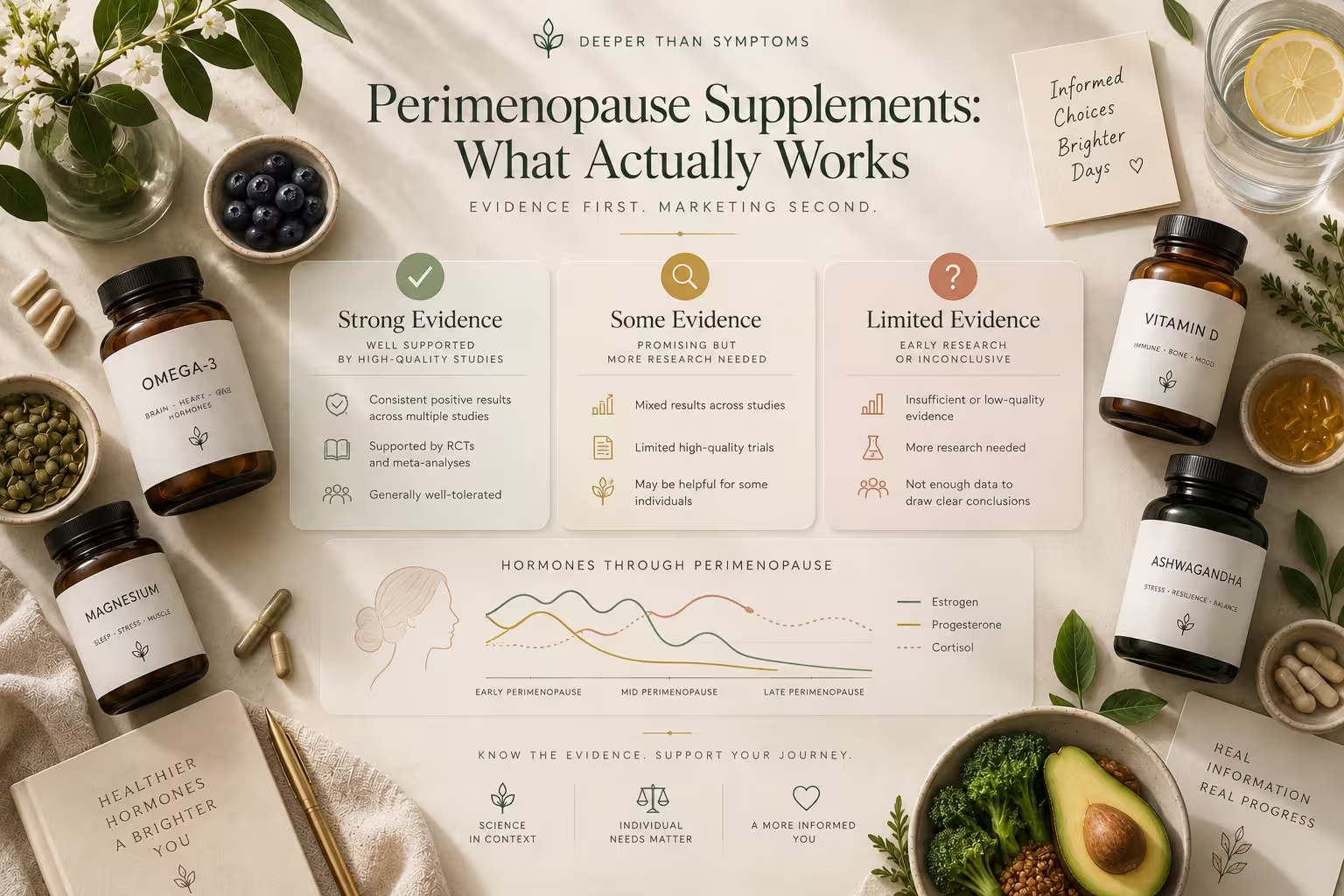
On this page Read more
- The Short Answer
- Why Perimenopause Needs Different Supplements Than Menopause
- Perimenopause Supplements at a Glance
- The Evidence, Ranked: Best Supplements for Perimenopause
- Match the Supplement to Your Symptom
- How Long Do Perimenopause Supplements Take to Work?
- How to Build Your Perimenopause Supplement Stack
- How to Buy Perimenopause Supplements That Are Actually What They Say
- Safety, Interactions, and When to Talk About HRT
- Frequently Asked Questions
- Key Takeaways
- Your Next Step
- References
Reading time: ~11 min | Medically reviewed by Dr. Prerana Suryawanshi, MBBS | Last reviewed: September 2026
You're 44. Your periods still show up, just not when they used to. You're wide awake at 3am for no reason. Your patience is thinner, your recall is slower, and your knees have started commenting on the stairs.
So you typed "perimenopause supplements" into Google. Now you're staring at forty bottles that all promise to balance your hormones.
Here's something that might explain why none of them have quite worked.
In 2023, The Menopause Society rated supplements and herbal remedies as "not recommended" for hot flashes (The Menopause Society). That same year, a meta-analysis of 22 randomized trials (2,310 women) found black cohosh clearly beat placebo for hot flashes (Menopause).
Both are true. And once you see why both can be true, choosing perimenopause supplements gets a lot simpler.
The supplement aisle is built around one symptom: the hot flash. But perimenopause isn't "early menopause." It's a different biological event with its own hormonal signature. The perimenopause symptoms that wreck your week (broken sleep, new anxiety, brain fog, aching joints, disappearing muscle) mostly aren't hot flashes. So the supplements with the best evidence are often not the ones marketed for it.
This guide ranks every common option by the quality of the evidence. It tells you what each one is actually doing in your body and shows the doses used in the trials. Then it gives you a sequence for building a stack that fits your symptoms.
This post is for educational purposes only. It isn't medical advice, and it isn't a substitute for working with a qualified practitioner. Some links may be affiliate links; see our editorial policy.
The Short Answer
The best perimenopause supplements, based on randomized trial evidence, are creatine (muscle, bone, brain), vitamin D if you're deficient, ashwagandha for stress and sleep, black cohosh for hot flashes, and omega-3s for mood and brain. Magnesium and soy isoflavones have mixed evidence. "Hormone balance" blends have almost none. Match the supplement to your loudest symptom, fix deficiencies first, and add one thing at a time.
In this guide:
- Why perimenopause needs different supplements than menopause
- Perimenopause supplements at a glance (table)
- Tier 1: best evidence
- Tier 2: mixed evidence
- Tier 3: skip or be careful
- Match the supplement to your symptom
- How long they take to work
- How to build your stack
- How to buy a supplement that's actually what it says
- Safety, interactions, and the HRT question
- FAQ
- References
Why Perimenopause Needs Different Supplements Than Menopause
Perimenopause is the transition before your final period. It usually starts in your early-to-mid forties and lasts four to eight years. The hormones don't behave the way most people assume, which is why perimenopause symptoms confuse so many women, and so many doctors.
Progesterone falls first, not estrogen. As ovulation gets less reliable, some cycles skip it entirely. No ovulation means no progesterone surge in the second half of the cycle (see the upstream drivers in what causes low progesterone).
Progesterone is your calming hormone. It works on the same GABA receptors that anti-anxiety drugs target. So when it starts disappearing, you don't feel "menopausal." You feel wired, anxious, and awake at 3am (learn more about low progesterone symptoms and how they develop).
Estrogen doesn't fall. It swings. Some cycles it spikes higher than it did in your thirties, then crashes. That whiplash is behind heavy periods and breast tenderness one month, hot flashes and flat mood the next.
Three other things shift at the same time. Your HPA axis (the stress-response system) gets more reactive, so the same deadline hits harder than it used to (explore HPA axis dysfunction symptoms). Muscle and bone start declining faster. And estrogen in the brain drops, which is linked to those "where did I put the word" moments.
Now look back at the shelf. Most menopause supplements target a stable low-estrogen state. Perimenopause is the opposite: instability, progesterone loss, and a stress system on a hair trigger.
That mismatch is why so many women say "I tried everything and nothing worked." They weren't doing it wrong. They were using menopause supplements for a perimenopause problem. The right supplements for perimenopause start from the right biology.
Perimenopause Supplements at a Glance
| Supplement | Best for | Evidence in perimenopause | Dose used in trials* | Watch out for |
|---|---|---|---|---|
| Creatine monohydrate | Muscle, bone, brain fog | Strong (7-trial meta-analysis + perimenopause RCT) | 3–5 g/day | Mild water retention first weeks |
| Vitamin D3 | Fatigue, aches, mood (if deficient) | Strong when deficient | Based on your blood level | Test first; more isn't better |
| Ashwagandha root | Anxiety, 3am waking, stress | Good (100-woman perimenopause RCT) | 300 mg twice daily | Thyroid conditions, liver, pregnancy |
| Black cohosh | Hot flashes, night sweats | Good for hot flashes only | 20–40 mg standardized extract | Liver disease |
| Omega-3 (EPA/DHA) | Mood, brain, sleep | Moderate, "indicative of benefit" | 1–2 g EPA+DHA | Blood thinners |
| Magnesium glycinate | Sleep, tension, migraine | Mixed, low certainty | 200–400 mg elemental | Loose stools (citrate/oxide) |
| Soy isoflavones | Mood, palpitations | Mixed; not for hot flashes | 50–100 mg/day | Conflict-of-interest in trials |
| "Hormone balance" blends | — | None | Undisclosed | Can't tell what's working |
| OTC DHEA / pregnenolone | — | Practitioner-only | — | These are hormones, not vitamins |
*Doses are what the cited trials of these perimenopause supplements used, for context only. They are not a prescription. Your practitioner should set your dose.
The Evidence, Ranked: Best Supplements for Perimenopause
I've sorted these perimenopause supplements into three tiers by the strength of randomized trial evidence. I've given extra weight to trials run in perimenopausal women, not only postmenopausal ones. That distinction matters more than most supplement guides admit.
Tier 1: The Best-Supported Perimenopause Supplements
Creatine
This is the one that surprises people. Creatine isn't just for gym bros. It's quietly become one of the best-studied supplements for women in the menopause transition. It's also one of the best perimenopause supplements you've probably never been told about.
The evidence. A 2026 meta-analysis in the Journal of the International Society of Sports Nutrition pooled seven randomized trials (608 women). Creatine monohydrate increased lean mass, especially alongside resistance training (JISSN).
A 2025 trial called CONCRET-MENOPA gave creatine to 36 perimenopausal and menopausal women for eight weeks. The medium-dose group improved reaction time and raised creatine levels in the frontal brain (Journal of the American Nutrition Association).
Best for: brain fog, weakness, joint aches, protecting muscle and bone. Creatine for women over 40 targets the things that quietly change first in perimenopause.
Trial doses: 3–5 g of creatine monohydrate daily. No loading phase needed.
Watch out for: a pound or two of water weight in the first weeks. That's muscle hydration, not fat.
Vitamin D (when you're actually low)
Vitamin D deficiency is common in midlife women, and it mimics perimenopause symptoms: fatigue, low mood, muscle aches. Of all the perimenopause vitamins people ask about, this is the one worth testing before anything else.
The evidence. A 2022 meta-analysis of 13 trials in Frontiers in Endocrinology found supplementation improved grip strength in postmenopausal women (Frontiers in Endocrinology). A 2023 meta-analysis in the Journal of the Academy of Nutrition and Dietetics found it lowered C-reactive protein, a marker of chronic inflammation (Journal of the Academy of Nutrition and Dietetics). The catch: the benefit is clearest when you start out deficient.
Best for: fatigue, aches, low mood, and bone protection, but only if your 25(OH)D is low.
Trial doses: vary widely. Your dose should come from your blood level, not a bottle.
Watch out for: guessing. Vitamin D for perimenopause is a test-first supplement, not a guess-first one.
Ashwagandha
One of the very few botanicals with a trial run specifically in perimenopausal women.
The evidence. A 2021 randomized, placebo-controlled study in the Journal of Obstetrics and Gynaecology Research gave 100 perimenopausal women a root extract for eight weeks. Total Menopause Rating Scale scores dropped significantly, with the biggest wins in the psychological and urogenital domains (Journal of Obstetrics and Gynaecology Research). Two later meta-analyses confirm it lowers perceived stress, anxiety, and serum cortisol (Explore; Phytotherapy Research).
Best for: anxiety, irritability, 3am waking, feeling "wired but tired." If your perimenopause looks like stress, ashwagandha for perimenopause is where the evidence points.
Trial doses: 300 mg of root extract, twice daily.
Watch out for: thyroid conditions (it can nudge thyroid hormone up — see our Hashimoto's disease diet protocol and guide on subclinical hypothyroidism), rare liver reports, and pregnancy.
Black cohosh
The evidence. That 22-trial meta-analysis found black cohosh improved overall menopausal symptoms, hot flashes, and somatic symptoms. It did not improve anxiety or depression (Menopause).
Best for: black cohosh for hot flashes and night sweats, specifically. Of all the perimenopause supplements here, it's the most single-purpose.
Trial doses: 20–40 mg per day of a standardized extract.
Watch out for: liver disease (rare injury reports), and talk to your practitioner first if you've had a hormone-sensitive cancer.
Omega-3 (EPA/DHA)
The evidence. A 2025 review in Post Reproductive Health looked at omega-3s in the menopause transition. It called the evidence "relatively sparse" but "indicative of benefit" for brain function and mood (Post Reproductive Health). One useful detail: DHA-rich formulas look more promising for sleep than EPA-heavy ones.
Best for: low mood, brain fog, sleep quality, and long-term heart protection.
Trial doses: roughly 1–2 g of combined EPA and DHA per day.
Watch out for: blood-thinning medication. Check with your practitioner.
Tier 2: Perimenopause Supplements With Mixed Evidence
Magnesium
Magnesium for perimenopause is probably the most recommended of all perimenopause supplements online, mostly for sleep. The evidence is softer than the hype.
The evidence. A 2026 systematic review in the Journal of Dietary Supplements looked at 12 randomized trials. Its conclusion: current evidence "does not support oral magnesium as a routine treatment for insomnia." It did allow for modest benefits on some subjective sleep outcomes. Certainty was low to very low (Journal of Dietary Supplements).
The wrinkle worth knowing. Serum magnesium holds less than 1% of your body's magnesium, and your kidneys defend it tightly. A "normal" blood test can miss real tissue depletion (Journal of the American Nutrition Association). That's why so many people feel better on magnesium while their labs never budge — a dynamic we explore in functional lab ranges vs conventional.
Best for: a low-risk trial for sleep, muscle tension, and migraine. Just don't expect it to do the job of progesterone.
Trial doses: 200–400 mg of elemental magnesium. Glycinate is gentler on the gut than citrate or oxide.
Soy isoflavones
The evidence. A 2025 meta-analysis in PeerJ, run specifically in perimenopausal women, found soy isoflavones improved overall symptom scores, headaches, palpitations, psychosocial symptoms, and depression (PeerJ). They did nothing measurable for hot flashes. A 2024 meta-analysis landed in the same place and flagged a high risk of conflict of interest in the included trials (Explore).
Best for: mood and palpitations, possibly. Not night sweats. And read the funding line.
Trial doses: 50–100 mg of isoflavones per day.
Other perimenopause vitamins people ask about
- B12 and iron: worth testing, because low levels impersonate perimenopause fatigue and brain fog. Supplement only if a lab says you need to — understand the root cause of low ferritin and why you might wake up exhausted. Iron without a low ferritin can do harm.
- Calcium: aim for food first. Supplement only if your intake is short, and pair with vitamin D and K2.
- B6 for mood: the evidence in perimenopause is thin. Fine in a B-complex, not worth high doses.
Tier 3: Perimenopause Supplements to Skip (or Handle With Care)
"Hormone balance" blends. These typically stack six to twelve ingredients at undisclosed or sub-therapeutic doses. If you feel better, you have no idea why. If you feel worse, same problem.
Over-the-counter DHEA and pregnenolone. These are hormone precursors, not vitamins. They belong under practitioner supervision with lab monitoring.
Anything promising to "balance" or "reset" your hormones. No supplement reliably balances estrogen and progesterone. That's simply not what they do. Treat the phrase as a marketing red flag, not a feature.
Match the Supplement to Your Symptom
Here's the reframe that makes all of this usable. Don't start with the supplement. Start with your loudest perimenopause symptom, ask what's most likely driving it, and then choose.
| Your loudest symptom | Most likely driver | Supplements for perimenopause to consider | Worth testing first |
|---|---|---|---|
| Insomnia, 3am waking, new anxiety | Progesterone decline; reactive HPA axis | Ashwagandha, magnesium glycinate, DHA-rich omega-3 | Cortisol pattern, ferritin |
| Hot flashes and night sweats | Erratic estrogen | Black cohosh | Full thyroid panel (thyroid issues mimic hot flashes) |
| Brain fog, slower word recall | Falling brain estrogen; low creatine stores | Creatine, omega-3 | B12, ferritin, thyroid |
| Joint aches, weakness, muscle loss | Estrogen decline; early sarcopenia | Creatine + resistance training, vitamin D | 25(OH) vitamin D, CRP |
| Low mood, irritability | Estrogen and progesterone swings | Omega-3, ashwagandha, soy isoflavones | Vitamin D, thyroid |
| Heavy periods, deep fatigue | High-estrogen cycles; iron loss | Iron, only if ferritin is low | Ferritin, CBC |
A client I'll call Priya, 46, came in with a bag of eleven bottles and a sleep score of 3 out of 10. Her ferritin was 14. That's "normal" on the lab report and well below the optimal range most functional practitioners aim for (see functional lab ranges vs conventional).
Her vitamin D was 19 ng/mL. None of her eleven perimenopause supplements addressed either one.
We corrected iron and vitamin D, added ashwagandha eight weeks later, and left the other nine bottles in the cupboard. Her sleep score was a 7 by week twelve. The point isn't the specific stack. The point is that the order mattered more than the ingredients.
How Long Do Perimenopause Supplements Take to Work?
Most perimenopause supplements need four to twelve weeks before you can judge them fairly. Here's a realistic timeline, based on the trial durations above:
- Magnesium: 2–4 weeks for sleep or tension, if it's going to help at all.
- Ashwagandha: the perimenopause trial ran 8 weeks; most people notice stress changes by week 4–6.
- Black cohosh: 4–8 weeks for hot flashes.
- Creatine: muscle stores saturate in about 4 weeks; strength and brain effects show at 8–12 weeks, faster with resistance training.
- Vitamin D: 8–12 weeks to restore a low level.
- Omega-3: 8–12 weeks; tissue levels change slowly.
If you've given something 12 weeks at a sensible dose and nothing has moved, it isn't your supplement. Stop it and move on.
How to Build Your Perimenopause Supplement Stack
Step 1: Get a baseline. Pick your three most disruptive symptoms and score them 1–10 every day for one week before you change anything. "I think I'm sleeping better?" isn't data. A number is.
Step 2: Test the foundations. Ask for 25(OH) vitamin D, ferritin, B12, a full thyroid panel, and HbA1c. These catch the deficiencies that impersonate perimenopause, the ones no botanical will fix.
Step 3: Correct deficiencies before you add botanicals. Low vitamin D, low ferritin, low B12: fix these first. It's the least glamorous step and the highest-leverage one.
Step 4: Add one thing at a time. One perimenopause supplement, four to six weeks, keep scoring. Adding four things on the same Monday means you'll never know which one helped, or which one gave you the headache.
Step 5: Reassess at 12 weeks. Drop anything that hasn't moved a number. Keep only what earns its place. A stack you can explain is worth more than a bigger one you can't.
How to Buy Perimenopause Supplements That Are Actually What They Say
Supplements aren't regulated like medicines. Two bottles of perimenopause supplements with the same name can contain very different things. Five things to check on the label:
- Third-party testing. Look for a USP, NSF, or Informed Choice mark. It means someone outside the company checked what's inside.
- Standardized extracts for botanicals. Black cohosh should be a standardized extract, not "root powder." Ashwagandha should be a root extract with the withanolide percentage listed.
- Elemental dose for minerals. "Magnesium glycinate 1,000 mg" might deliver only 100–140 mg of actual magnesium. The elemental number is the one that matters.
- Single ingredients over blends. You can't troubleshoot a 12-ingredient "perimenopause support" formula. Buy the one thing you're testing.
- No "proprietary blend" on the label. That phrase legally lets the maker hide the dose of each ingredient.
Price is a poor guide to quality. Testing marks and disclosed doses are good ones.
Safety, Interactions, and When to Talk About HRT
Natural doesn't mean risk-free, and perimenopause supplements are no exception.
- Black cohosh: rare liver injury reports. Avoid with liver disease.
- Ashwagandha: a handful of liver reports; can raise thyroid hormone levels (relevant with Hashimoto's or thyroid medication); avoid in pregnancy.
- St John's wort (often bundled with black cohosh): interacts with oral contraceptives, SSRIs, and many other medications.
- Omega-3 at higher doses: check with your practitioner if you're on blood thinners.
- Iron: never supplement without a low ferritin result.
See your doctor promptly, not a supplement, if you have any of these:
- Bleeding between periods or after sex
- Periods lasting more than seven days, or soaking through a pad every hour
- Any bleeding after 12 months without a period
- Hot flashes with unexplained weight loss or a racing heart at rest
Those need investigation, not a bottle.
And here's the part a lot of wellness content skips. Supplements are not a replacement for menopausal hormone therapy when you need it. For moderate-to-severe hot flashes, hormone therapy is still the most effective treatment we have. The 2023 Menopause Society statement also lists several non-hormone prescription options with Level I evidence (The Menopause Society).
Perimenopause supplements work best as supportive tools inside a bigger plan you build with a practitioner. They're not a way to avoid that conversation.
Frequently Asked Questions
What are the best supplements for perimenopause?
What vitamins should I take during perimenopause?
Does magnesium help with perimenopause symptoms?
Is black cohosh safe, and does it work?
Can ashwagandha help with perimenopause anxiety and sleep?
Should women over 40 take creatine?
Can supplements balance my hormones?
Should I take perimenopause supplements or HRT?
How long does perimenopause last?
Key Takeaways
- Perimenopause is progesterone falling and estrogen swinging, not a steady low-estrogen state. Most menopause supplements are built for the wrong problem.
- The best-evidenced perimenopause supplements are creatine, vitamin D (if low), ashwagandha, black cohosh, and omega-3s.
- Magnesium and soy isoflavones are reasonable low-risk perimenopause supplements to trial. "Hormone balance" blends and OTC hormone precursors are not.
- Match the supplement to your loudest symptom, fix deficiencies first, add one thing at a time, and judge at 12 weeks.
- Hormone therapy is still the most effective treatment for hot flashes. Supplements support the plan; they don't replace the conversation.
Your Next Step
Remember the two true statements from the top? The Menopause Society is right that supplements aren't a hot-flash treatment. The black cohosh researchers are right that it helps. Both make sense once you stop treating perimenopause as a hot-flash problem and start treating it as what it is: progesterone falling, estrogen swinging, a stress system on edge, and a body quietly renegotiating muscle, bone, and brain.
The best perimenopause supplements are the ones aimed at your mechanism. Not the ones with the prettiest label.
Want the shortcut? The free Perimenopause Supplement Decision Sheet maps your perimenopause symptoms to their likely drivers, lists the lab markers worth asking for, and gives you a structured 12-week one-at-a-time tracking sheet — this whole guide on one printable page.
Your body isn't malfunctioning. It's transitioning, and it's telling you exactly where to look.
Perimenopause Supplement Decision Sheet
Download our free Perimenopause Supplement Decision Sheet — a symptom-to-driver map, lab testing checklist, and 12-week protocol tracker on one printable page.
Download PDF FreeReferences
Research retrieved via PubMed and peer-reviewed journals:
- The 2023 nonhormone therapy position statement of The North American Menopause Society. Menopause. 2023;30(6):573-590. https://doi.org/10.1097/GME.0000000000002200
- Black cohosh extracts in women with menopausal symptoms: an updated pairwise meta-analysis. Menopause. 2023;30(6):668-680. https://doi.org/10.1097/GME.0000000000002196
- Creatine monohydrate for lean mass, strength, and bone density in postmenopausal women: a systematic review and meta-analysis. Journal of the International Society of Sports Nutrition. 2026. https://doi.org/10.1080/15502783.2026.2668435
- The Effects of 8-Week Creatine Hydrochloride and Creatine Ethyl Ester Supplementation on Cognition, Clinical Outcomes, and Brain Creatine Levels in Perimenopausal and Menopausal Women (CONCRET-MENOPA): A Randomized Controlled Trial. Journal of the American Nutrition Association. 2025. https://doi.org/10.1080/27697061.2025.2551184
- Vitamin D Supplementation Improves Handgrip Strength in Postmenopausal Women: A Systematic Review and Meta-Analysis of Randomized Controlled Trials. Frontiers in Endocrinology. 2022. https://doi.org/10.3389/fendo.2022.863448
- The Effects of Vitamin D Supplementation on C-Reactive Protein and Systolic and Diastolic Blood Pressure in Postmenopausal Women: A Meta-Analysis and Systematic Review of Randomized Controlled Trials. Journal of the Academy of Nutrition and Dietetics. 2023. https://doi.org/10.1016/j.jand.2023.10.013
- Effect of an ashwagandha (Withania somnifera) root extract on climacteric symptoms in women during perimenopause: A randomized, double-blind, placebo-controlled study. Journal of Obstetrics and Gynaecology Research. 2021. https://doi.org/10.1111/jog.15030
- Effects of Ashwagandha (Withania somnifera) on stress and anxiety: A systematic review and meta-analysis. Explore. 2024. https://doi.org/10.1016/j.explore.2024.103062
- Does Ashwagandha supplementation have a beneficial effect on the management of anxiety and stress? A systematic review and meta-analysis of randomized controlled trials. Phytotherapy Research. 2022. https://doi.org/10.1002/ptr.7598
- Omega-3 fatty acids, brain health and the menopause. Post Reproductive Health. 2025. https://doi.org/10.1177/20533691251341701
- Magnesium Supplementation for Sleep in Adults: A Systematic Review of Randomized Controlled Trials. Journal of Dietary Supplements. 2026. https://doi.org/10.1080/19390211.2026.2719670
- Why Serum Magnesium Fails: A Narrative Review of Magnesium Biochemistry, Compartmental Exchange, and Endpoint Selection for Supplementation Trials. Journal of the American Nutrition Association. 2026. https://doi.org/10.1080/27697061.2026.2719468
- Effects of soy isoflavones on menopausal symptoms in perimenopausal women: a systematic review and meta-analysis. PeerJ. 2025. https://doi.org/10.7717/peerj.19715
- The effect of soy isoflavones given to women in the climacteric period on menopausal symptoms and quality of life: Systematic review and meta-analysis of randomized controlled trials. Explore. 2024. https://doi.org/10.1016/j.explore.2024.05.010
This content is for educational purposes only and is not intended to diagnose, treat, cure, or prevent any disease. Always consult a qualified healthcare practitioner before making changes to your supplements or medication.
Fact Checked By Dr. Prerana Suryawanshi, MBBS
This medical analysis has been peer-reviewed and vetted by a credentialed practitioner to ensure diagnostic safety.

Written by Dr. Pooja, PharmD
Dr. Pooja didn't set out to write about gut health and hormones. She set out to become a pharmacist — learning how drugs move through the body, why they interact the way they do, and what it actually takes to prove a treatment works. That training is still the lens she writes through today.
View all articles by Dr. Pooja