Subclinical Hypothyroidism: Why One TSH Isn't the Whole Story
Subclinical hypothyroidism means high TSH with normal T4. Learn what the subclinical hypothyroidism TSH range means, why it's debated, and what to ask next.
On this page Read more
- What Subclinical Hypothyroidism Actually Is
- Why the TSH Range for Subclinical Hypothyroidism Is Still Debated
- See Both TSH Ranges Side by Side
- Subclinical Hypothyroidism Symptoms — And Why They're Hard to Pin Down
- What Causes Subclinical Hypothyroidism
- Subclinical vs Overt Hypothyroidism — And How Often It Progresses
- What US Guidelines Say About Treating Subclinical Hypothyroidism
- The Functional Testing Approach: A Fuller Thyroid Picture
- What to Do With a Borderline TSH Result
- When to Work With a Practitioner
- Frequently Asked Questions
- The Circled Number, Revisited
Reading time: ~13 min | Last reviewed: August 2026
You left the appointment holding a printout with one number circled in pen.
Your TSH came back at 5.2. Your free T4 was normal. The word your doctor used was "borderline." Maybe they said to recheck in six months. Maybe they said it was nothing.
And you drove home wondering how one result can be both flagged and waved off in the same breath.
That pattern has a name: subclinical hypothyroidism. It describes a thyroid working harder than usual to keep hormone output steady. Subclinical hypothyroidism is common, too. In the CDC's NHANES survey of more than 17,000 Americans, 4.3 percent had this exact pattern (DOI).
If you've been told your labs "look normal" while you still feel off, this is probably part of why. Here's what almost nobody explains at that appointment: the line that decides whether you "have" subclinical hypothyroidism is one of the most argued-over numbers in thyroid medicine. Move it by one decimal point and hundreds of thousands of people change categories overnight.
That isn't a reason to panic. It's a reason to read the whole picture rather than one circled number.
What Subclinical Hypothyroidism Actually Is
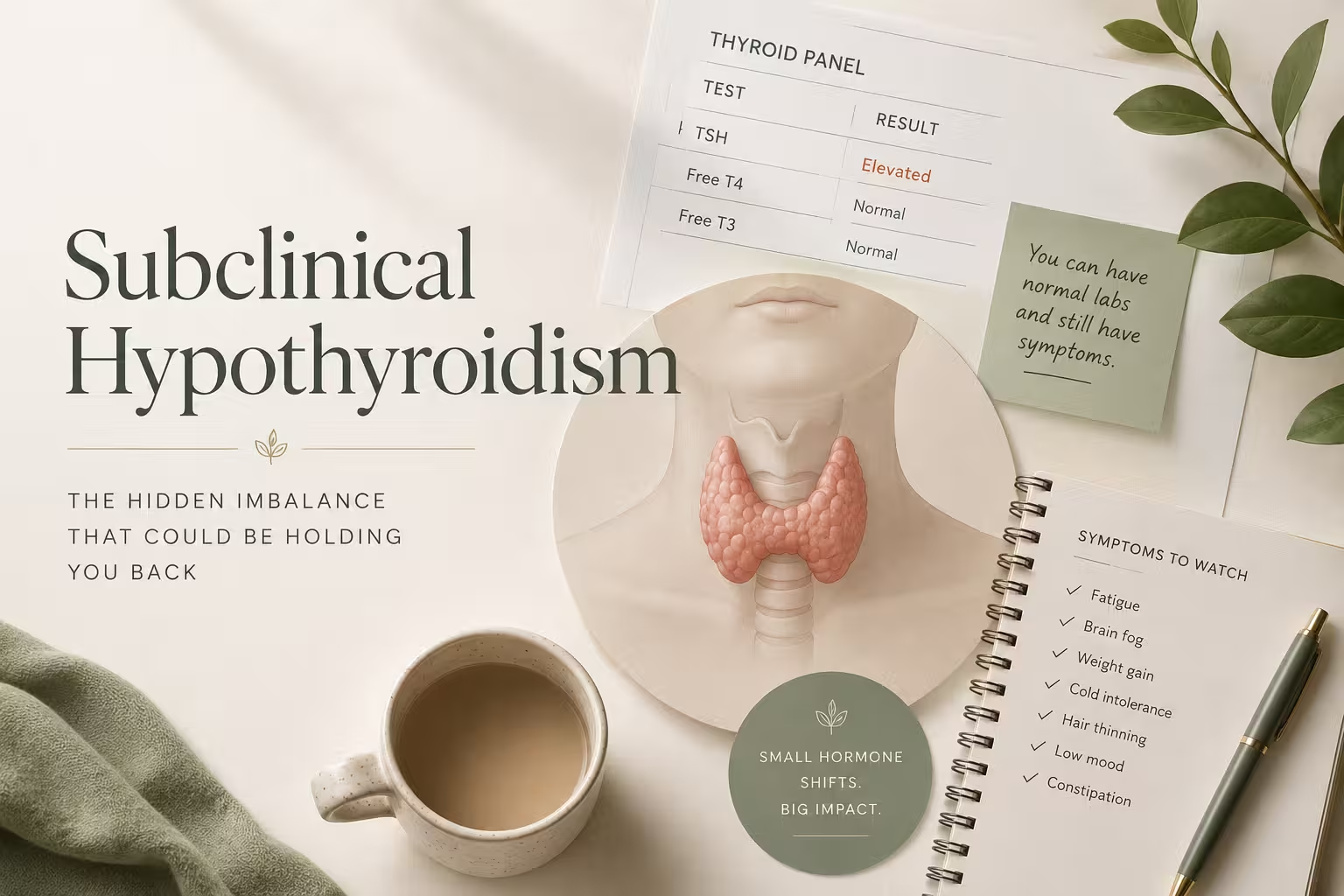
Subclinical hypothyroidism is a lab pattern, not a symptom list. One thing defines it: a TSH level above the lab's reference range while free thyroxine (free T4) stays inside it. It shows up on routine thyroid function tests, often when nobody was looking for it.
To make sense of that, you need to know what TSH measures. It isn't thyroid hormone.
TSH stands for thyroid-stimulating hormone, and your pituitary gland makes it. Think of the pituitary as a thermostat and the thyroid as a furnace. When the thermostat senses heat drifting low, it turns TSH up to push the furnace harder.
So a rising TSH is the request for more output — not the output itself.
That's why the subclinical hypothyroidism pattern is interesting. Free T4 is still normal, so the furnace is keeping up. But the thermostat is calling louder than it used to.
In plain terms: the thyroid faces some stress or damage. The pituitary makes up for it by raising TSH. Hormone levels hold steady. Many people feel completely fine. Some notice fatigue, cold hands, or slow digestion they can't quite explain.
Your thyroid isn't broken here — it's compensating. Both outcomes above are common, and neither one means something has gone badly wrong. That's the honest version.
One detail worth knowing up front
US guidelines are specific about when this label even applies. Joint guidance from the American Thyroid Association (ATA) and the American Association of Clinical Endocrinologists sets two conditions. Thyroid function has to have been stable for weeks or longer. And there can't be a recent or ongoing severe illness.
Read that again, because it matters. A single TSH drawn during a rough stretch doesn't meet the definition of subclinical hypothyroidism. Even by conventional standards, one number isn't enough.
Why the TSH Range for Subclinical Hypothyroidism Is Still Debated
Most US labs — LabCorp, Quest, and Mayo Clinic Laboratories among them — flag TSH above roughly 4.0 to 4.5 mIU/L. Many functional medicine practitioners work toward a narrower optimal thyroid range, often citing 1.0 to 2.0 mIU/L. The gap between the conventional and functional TSH range is where most of the confusion in this topic lives. For a deeper breakdown of reference intervals, see our guide on functional vs. conventional lab ranges.
And honestly? It would be convenient to say the narrower range is simply correct. The research on subclinical hypothyroidism doesn't support that clean a story.
A review by Laurberg and colleagues in Nature Reviews Endocrinology took up this question head-on. Calls to lower the upper TSH limit from 4.0 to 2.5 mIU/L were not backed by population data. The shape of the TSH curve in healthy people shows no hidden group of missed cases between 2.5 and 4.0.
The same review found real support for the opposite argument. The upper limit may be too low for older adults and for women — which risks treating people who don't need it (DOI).
So the threshold that defines subclinical hypothyroidism is contested in both directions. That's the actual state of the science.
Your reference range depends on who's in it
Here's a second wrinkle, and it's one American readers rarely hear about.
The NHANES data found that average TSH differs by race and ethnicity in the US. Mean TSH ran 1.57 mIU/L in white non-Hispanic adults, 1.43 in Mexican American adults, and 1.18 in Black non-Hispanic adults. Thyroid antibodies split the same way. TPO antibodies showed up in 12.3 percent of white adults, versus 4.5 percent of Black adults (DOI).
US guidance also adjusts for age. The ATA suggests a higher TSH target for adults in their seventies — roughly 4 to 6 mIU/L.
A reference range isn't a law of biology. It's a statistical description of one group of people, measured on one assay. An optimal thyroid range is a clinical judgment layered on top of that.
Where does this leave you? Not with a verdict — with better questions. The number matters. So does whose reference range produced the flag, what your other thyroid markers show, and whether the pattern holds on a second draw.
See Both TSH Ranges Side by Side
Reading about the gap between conventional and functional ranges is one thing. Seeing where a value sits against both at once is clearer.
That's exactly what our Lab Range Explorer was built for. Choose TSH and you'll see the conventional reference range and the commonly cited functional range drawn on the same axis, with the sourcing for each.
No verdict. No status badge. No "you're in trouble" icon — just both frameworks made visible, so you can see how much they overlap and where they part ways.
The same tool covers free T3, free T4, and reverse T3 — the thyroid function tests that turn a single TSH result into an actual picture.
Subclinical Hypothyroidism Symptoms — And Why They're Hard to Pin Down
Reported subclinical hypothyroidism symptoms include fatigue, feeling cold, dry skin, constipation, low mood, brain fog, hair thinning, and weight gain you can't explain.
Sound familiar? Here's the catch: every item on that list has dozens of other possible drivers. And the research on whether subclinical hypothyroidism actually causes them is mixed.
Three large studies on subclinical hypothyroidism are worth knowing about. They cut against the intuitive story.
The Colorado Thyroid Disease Prevalence Study screened 25,862 people at a statewide health fair. It found raised TSH in 9.5 percent of them. That's more than double the NHANES figure, largely because health-fair crowds aren't a random sample. On symptoms, the finding was blunt. People with low thyroid function did report symptoms more often. But each symptom on its own was a poor predictor (DOI).
The LifeLines Cohort Study measured quality of life across 9,491 adults. People with mildly raised TSH scored about the same as those with normal TSH across nine domains. Even the group above 10 mIU/L didn't score lower. Smoking, other health conditions, and body composition explained far more than thyroid status did (DOI).
And a 2018 meta-analysis in JAMA pooled 21 trials covering 2,192 adults. Thyroid hormone therapy did lower TSH into the normal range. But it showed no measurable benefit for quality of life or thyroid symptoms (DOI).
On mood specifically: a JAMA Psychiatry meta-analysis of 348,014 people found the tie between low thyroid function and clinical depression was far weaker than once assumed. The link showed up mainly in overt hypothyroidism, not the subclinical kind (DOI).
Read those together and a fair summary emerges. A mildly raised TSH is unlikely to be the whole reason you feel unwell.
But it isn't nothing, either
The Colorado study found something that cuts the other way. Cholesterol rose steadily as thyroid function dropped. People with TSH between 5.1 and 10 mIU/L had higher total and LDL cholesterol than people with normal thyroid labs (DOI).
So subclinical hypothyroidism can carry measurable effects even when you feel fine. That's a reason to track it — not a reason to fear it.
And none of this means your symptoms aren't real. Consider a composite case — a reader I'll call Dana, 39. She came in with six months of afternoon crashes and a TSH of 4.8. Her thyroid result got all the attention.
Her ferritin was 14. Her sleep was averaging five and a half hours. Chasing the circled number alone would have missed both of the things most likely to be draining her.
What Causes Subclinical Hypothyroidism
The most common cause of subclinical hypothyroidism in the US is chronic autoimmune thyroiditis — Hashimoto's disease. The immune system slowly targets thyroid tissue, low-grade inflammation builds around the gland, and the gland loses some of its spare capacity. TSH rises to make up the difference.
This is the real hypothyroidism root cause question worth asking. Not just whether TSH is high, but why.
Antibody testing is how you get there. Thyroid peroxidase antibodies (TPOAb) show whether an immune process is part of the picture, and they carry real predictive weight. Among 940 women with normal thyroid function who tested TPOAb-positive, about 7 percent went on to develop subclinical or overt hypothyroidism within roughly a year (DOI).
These antibodies are common in the US. NHANES found TPO antibodies in 11.3 percent of Americans tested (DOI).
Other recognized subclinical hypothyroidism causes include:
- Iodine imbalance — too little and too much can both disturb thyroid function
- Recovery from illness — TSH can rise for a while during and after a bad infection
- Certain medications, including lithium, amiodarone, and some drugs that alter immune function
- Thyroid shifts after childbirth, which are common and often pass on their own
- Past thyroid surgery or radioiodine treatment
- Timing and lab-to-lab differences — TSH follows a daily rhythm and runs higher in early morning draws
- Biotin supplements, which can interfere with some lab methods and skew results
That last one deserves emphasis, because it's avoidable. High-dose biotin shows up in a lot of American hair and nail supplements, and it can skew thyroid panels. Most labs advise stopping it for a set period before testing. Worth asking your ordering clinician about by name.
Notice how many items on that list are temporary or measurement artifacts. A single raised TSH can reflect the state of your thyroid. It can also reflect the state of your week.
Subclinical vs Overt Hypothyroidism — And How Often It Progresses
The distinction between subclinical hypothyroidism vs overt hypothyroidism comes down to a single marker: free T4.
| TSH | Free T4 | |
|---|---|---|
| Normal thyroid function | Within range | Within range |
| Subclinical hypothyroidism | Above range | Within range |
| Overt hypothyroidism | Above range | Below range |
The obvious next question is whether one becomes the other. Here the data are genuinely reassuring, and rarely shared.
A population study followed 71 older adults with this lab pattern for an average of 4.2 years. About 7 percent progressed to the overt form — roughly four and a half times the rate in matched controls. So the risk is real.
The good news? TSH settled back to normal on its own in 53.5 percent of them. More than half resolved without any treatment. Higher starting TSH predicted progression, and values above 8 mIU/L carried the most weight (DOI).
That study followed older adults in Japan, so the exact percentages won't transfer to everyone. The direction still matters a great deal. For many people, subclinical hypothyroidism is a snapshot, not a path.
This is also the strongest practical argument for retesting before doing anything else. One draw can't tell "my thyroid is changing" apart from "I had a rough month."
What US Guidelines Say About Treating Subclinical Hypothyroidism
This is the part most articles skip. It's also the part American readers most need.
The ATA generally advises thyroid hormone treatment once TSH climbs above 10 mIU/L. Below that — between roughly 4.5 and 10 — routine treatment is not advised.
Instead, the ATA weighs each case on its own. It points to three things worth checking:
- Symptoms that fit low thyroid function
- Positive thyroid antibodies
- Heart disease, or risk factors for it
Pregnancy is handled separately and more strictly, with its own trimester-specific targets.
US screening advice for subclinical hypothyroidism is split. That explains a lot of the mixed messages you may have gotten:
- The US Preventive Services Task Force doesn't recommend routine screening for adults without symptoms
- The ATA has suggested screening from around age 35
- The American College of Physicians has suggested screening women over 50
None of this tells you what to do. It does tell you something useful, though. A thoughtful clinician has real room to judge here. And with subclinical hypothyroidism, "let's watch it" is a choice the guidelines actually support — not a brush-off.
The Functional Testing Approach: A Fuller Thyroid Picture
Conventional workups for subclinical hypothyroidism often start and stop with TSH, adding free T4 only if TSH gets flagged. Practitioners taking a root-cause approach want more context. The reasoning holds up well.
A fuller panel of thyroid function tests usually includes:
- TSH — the pituitary's demand signal
- Free T4 — the main hormone your thyroid releases, largely a storage form
- Free T3 — the active hormone your cells actually use
- Reverse T3 — an inactive form that rises during some stress and illness
- TPO and thyroglobulin antibodies — signs the immune system is involved
The addition that changes the most conversations is antibodies. Picture two people who both show a TSH of 5.0. One is TPO-positive with a family history of immune disease. The other is TPO-negative, was getting over the flu on the day of the draw, and takes a biotin supplement.
Same number. Entirely different situations. TSH alone can't tell them apart.
One practical note for US readers. Antibody tests often aren't included by default, and coverage varies by plan. Ask what your visit covers, and whether antibodies are part of it.
Timing matters too, and it's easy to control. TSH runs highest in the early morning. It also shifts day to day within the same person. Practitioners often suggest steady draw conditions — same time of day, similar circumstances — so a repeat test can be fairly compared to the first.
Before your appointment, prepare with our checklist on what to bring to a first functional medicine appointment.
What to Do With a Borderline TSH Result
Nothing here is a treatment plan, and no article can build one for you. These are the moves that tend to make the next conversation with your clinician more useful.
Ask about a repeat test before drawing conclusions. TSH settles on its own often enough that a second measurement weeks later tells you more than any single result. Ask what interval they'd recommend.
Ask whether thyroid antibodies are worth adding. TPO antibody status is one of the few results that truly changes how a borderline TSH gets read and tracked over time.
Ask what could have skewed the draw — recent illness, current supplements including biotin, new medications, time of day, pregnancy or recent birth.
Ask for your actual numbers and your lab's range. Ranges differ between LabCorp, Quest, and hospital labs. "Normal" means nothing without the range it came from.
Track symptoms with dates, not impressions. Two weeks of short daily notes on energy, temperature, digestion, and sleep gives your clinician a pattern instead of a summary. It also tells you something either way.
Get the rest of the basics checked. Checking for low ferritin, vitamin D, B12, and a metabolic panel often explains morning fatigue that gets pinned on a borderline thyroid. Dana's ferritin of 14 wasn't a thyroid problem.
Support the foundations while you gather information. Enough sleep, enough protein and total calories, selenium and iodine from food, and a lighter stress load all support thyroid function broadly. None of this replaces a real workup. And never start a supplement for a thyroid concern on your own. Talk to a qualified practitioner first. Iodine in particular can make some thyroid conditions worse.
When to Work With a Practitioner
Some situations call for prompt clinical attention rather than watchful waiting. Bring these to a qualified provider without delay:
- You're pregnant, trying to conceive, or recently gave birth — thyroid thresholds are stricter in pregnancy
- Your TSH is above 10 mIU/L rather than mildly raised
- Your free T4 has dropped below range
- You have a goiter, a thyroid nodule, or noticeable neck swelling
- You have known heart disease along with abnormal thyroid results
- Symptoms are getting worse or affecting your ability to function
For anything short of that list, the path is usually the same. Gather a fuller picture. Retest. Then decide with someone who can see your whole history.
Frequently Asked Questions
What is subclinical hypothyroidism?
What TSH level is considered subclinical hypothyroidism?
How common is subclinical hypothyroidism in the US?
Can subclinical hypothyroidism cause weight gain or fatigue?
Does subclinical hypothyroidism need to be treated?
Can subclinical hypothyroidism go away on its own?
Is subclinical hypothyroidism the same as hypothyroidism?
The Circled Number, Revisited
Go back to that printout.
A TSH of 5.2 with a normal free T4 isn't nothing. It isn't a life sentence either. It's a signal that your thyroid is working harder than the reference group. Measured once. On one assay, on one morning. Against a cutoff that researchers are still arguing over.
The most useful thing you can do with a borderline result is refuse to let it stand alone. Retest it. Add antibodies. Check ferritin and vitamin D. Note your symptoms with dates. Then have a real conversation with someone qualified to see all of it at once.
Subclinical hypothyroidism is a starting place, not a verdict. Your body isn't handing you a life sentence — it's handing you a clue, and clues are meant to be followed further.
One number circled in pen was never meant to be the answer.
Explore the ranges yourself
Compare conventional and functional optimal ranges for thyroid markers side-by-side with our interactive tools:
Want the questions in a form you can bring to your appointment? Download the free Thyroid Lab Questions Checklist — a one-page guide covering which markers to ask about, what can skew a TSH draw, and how to track symptoms before your visit.
Thyroid Lab Questions Checklist
Download our free Thyroid Lab Questions Checklist — a one-page guide covering which markers to ask about, what can skew a TSH draw, and how to track symptoms before your visit.
Download PDF FreeFact Checked By Dr. Prerana Suryawanshi, MBBS
This medical analysis has been peer-reviewed and vetted by a credentialed practitioner to ensure diagnostic safety.

Written by Dr. Pooja, PharmD
Dr. Pooja didn't set out to write about gut health and hormones. She set out to become a pharmacist — learning how drugs move through the body, why they interact the way they do, and what it actually takes to prove a treatment works. That training is still the lens she writes through today.
View all articles by Dr. Pooja