What to Avoid When Taking Low Dose Naltrexone
What to avoid when taking low dose naltrexone — from opioid medications to alcohol — explained clearly, plus side effects worth knowing about.
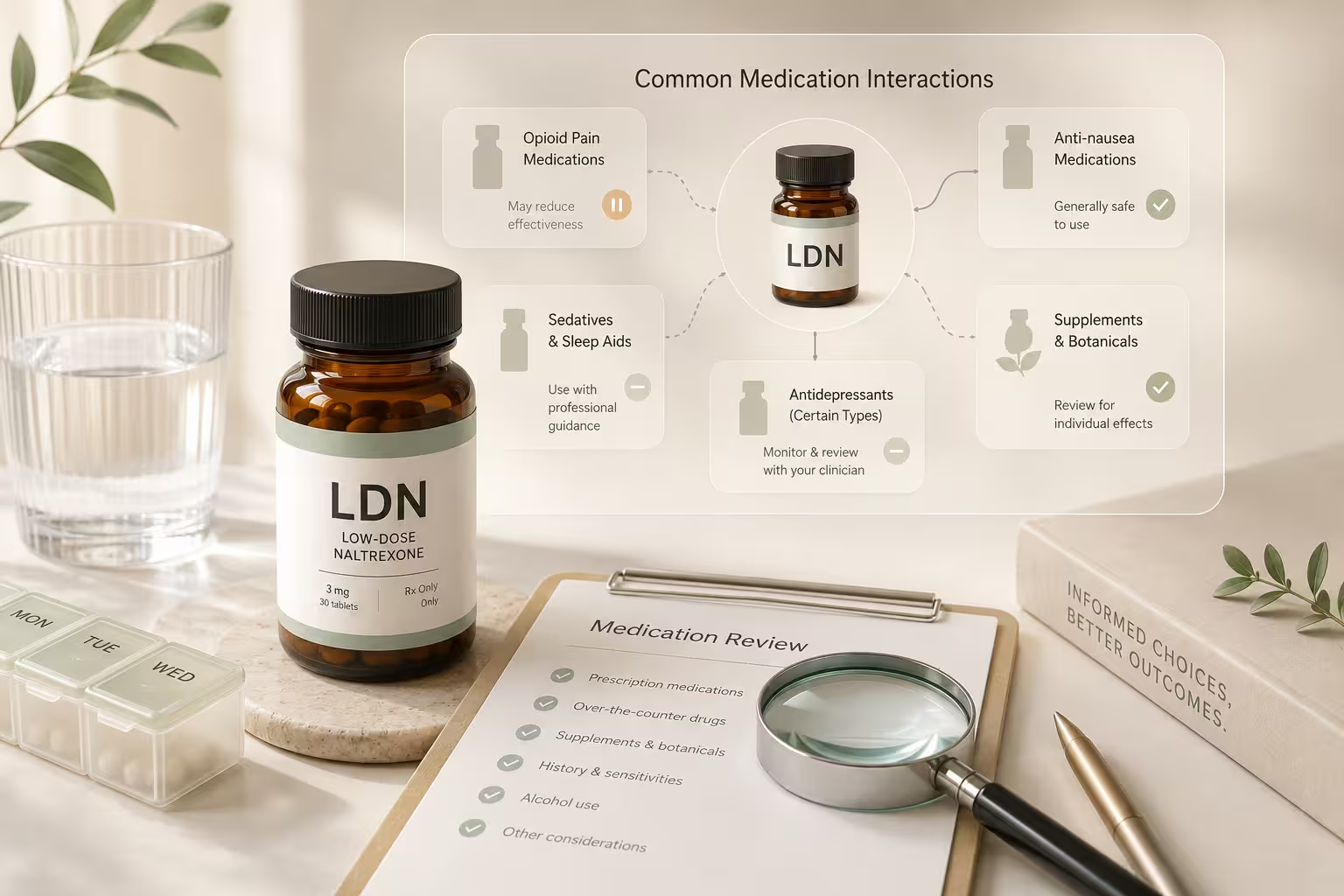
On this page Read more
- The Short Answer: What to Avoid on LDN
- Quick Refresher: How LDN Actually Works
- 1. Opioid Medications — The Non-Negotiable One
- 2. Hidden Opioids: The Medications People Forget
- 3. Excessive Alcohol
- 4. Starting New Medications Without Telling Your Prescriber
- 5. Changing Your Dose or Timing on Your Own
- 6. Going Into Surgery (or the ER) Without Disclosing LDN
- 7. Unregulated Online Sources
- Side Effects: What's Normal, What's Worth a Call
- Who Should Be Extra Cautious with LDN
- Frequently Asked Questions
- The Bottom Line
- References
Reading time: ~9 min | Last reviewed: August 2026
You finally found a practitioner who actually listens. For years, the symptoms never fully resolved. Fatigue that sleep doesn't touch. Flare-ups. Inflammation that "normal" labs couldn't explain. And then someone handed you a new tool: low dose naltrexone.
And then the questions started. Can you still take your usual pain reliever? Is a glass of wine off the table now? What happens if you need surgery next spring?
In other words: what to avoid when taking low dose naltrexone?
Good questions, all of them. Low dose naltrexone (LDN) is generally well tolerated in the research so far. But it works in a way that makes a handful of combinations worth understanding before you run into them. Knowing the boundaries isn't about fear. It's about using this therapy wisely, with your prescriber as your co-pilot.
Here's what actually deserves your attention.
The Short Answer: What to Avoid on LDN
The most important things to avoid while taking low dose naltrexone are opioid-based medications, including prescription painkillers and some codeine-containing cough or diarrhea products. That's because naltrexone blocks opioid receptors. Excessive alcohol, unsupervised dose changes, and undisclosed LDN use before surgery also belong on the caution list. Always review your full medication list with your prescriber.
That's the two-minute version. But most of us in the functional medicine world want to understand why. So let's walk through each one.
Quick Refresher: How LDN Actually Works
Naltrexone was originally approved at full doses (50 mg) as an opioid receptor blocker. At a fraction of that dose, something different seems to happen in the body.
A widely cited review in Clinical Rheumatology points to something interesting. At low doses, naltrexone appears to calm inflammation in the central nervous system. It seems to quiet overactive microglia — the immune cells of the brain. That effect looks separate from naltrexone's classic opioid-blocking role (Younger, Parkitny, and McLain, DOI: 10.1007/s10067-014-2517-2).
The same review calls LDN inexpensive and well tolerated. It also stresses that the evidence is still early. The trials so far have been small, and few have been repeated.
Here's the part that matters for safety. Even at low doses, naltrexone still briefly occupies opioid receptors. That brief block is likely part of how it nudges your body's own endorphin system. It's also the root of the most important interaction on this list.
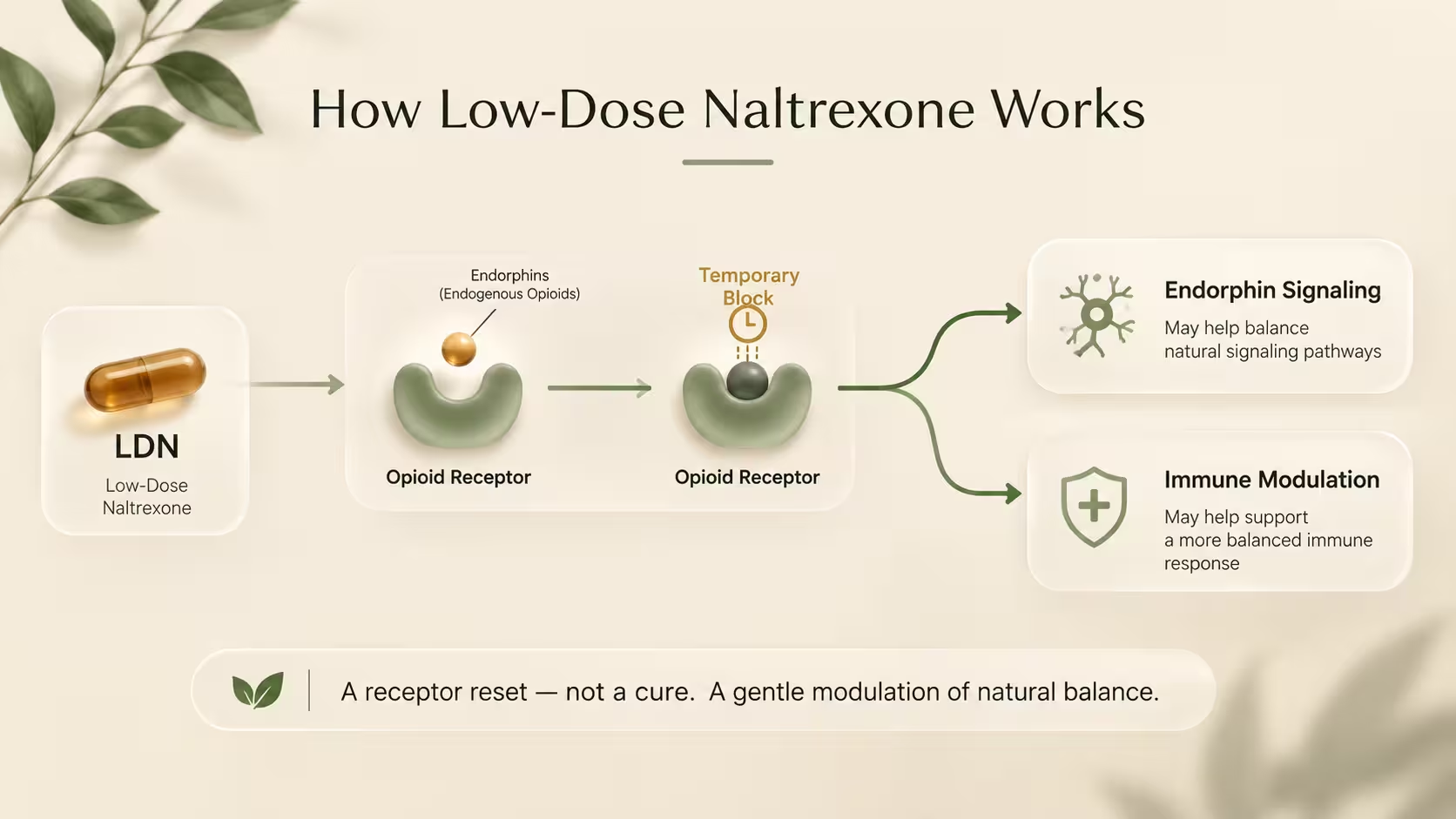 Diagram showing how low dose naltrexone works in the body.
1. Opioid Medications — The Non-Negotiable One
This is the one interaction that matters most, so let's start here.
Naltrexone is a receptor blocker. Clinically, it's called a mu-opioid receptor antagonist. Blocking opioid receptors is its core action. That's exactly why it was first developed to treat opioid and alcohol dependence (Patten, Schultz, and Berlau, DOI: 10.1002/phar.2086).
That same blocking action can interfere with opioid-based medications, in two directions.
Combining LDN and opioid medications creates two real problems:
- Blocked pain relief. An opioid painkiller may simply not work while naltrexone is occupying your receptors.
- Precipitated withdrawal. If someone is physically dependent on opioids, starting naltrexone — at any dose — can trigger sudden, severe withdrawal.
This is why prescribers screen carefully for current opioid use before starting LDN. Anyone currently taking opioid pain medication — or in recovery on opioid-based maintenance therapy — needs an individualized plan from their prescriber. Never a DIY approach.
The takeaway: do you take any opioid medication, or think you might need one? Have that conversation with your prescriber before LDN enters the picture. Not after.
2. Hidden Opioids: The Medications People Forget
The obvious opioids — oxycodone, hydrocodone, tramadol — are easy to flag. The sneaky ones live quietly in your medicine cabinet.
Some prescription cough suppressants contain codeine or hydrocodone. Certain prescription anti-diarrheal medications act on opioid receptors in the gut. You might reach for either one during a bad cold or a GI flare without ever connecting it to your LDN.
One simple habit solves this. Before starting any new medication, ask your pharmacist a single question: "Does this interact with naltrexone?" Pharmacists check naltrexone drug interactions in seconds. It's one of the most underused free safety resources in healthcare.
The same principle applies with your prescriber — going in with your questions written down changes the quality of the visit. Our functional medicine first appointment checklist walks through how to prepare.
3. Excessive Alcohol
Let's be precise here, because the internet tends to swing between "never touch a drop" and "doesn't matter at all." Neither is quite right.
Your liver processes naltrexone. At full doses, the drug carries longstanding cautions around liver health. LDN uses a fraction of that dose, and safety reviews so far describe it as well tolerated. Still, your liver does the work here — breaking down both the medication and any alcohol you drink.
There's a second wrinkle worth knowing. At full doses, naltrexone is an FDA-approved treatment for alcohol use disorder, partly because it blunts the reward of drinking. Some people on LDN notice alcohol simply feels different. Less appealing, or harder on their system than it used to be.
The functional medicine lens adds one more angle. If you're taking LDN for an inflammatory or autoimmune condition, alcohol is already working against your goals. It disrupts your gut lining, your sleep quality, and your immune balance — and gut barrier health sits upstream of a lot of inflammatory symptoms.
The takeaway: this is an individualized conversation with your prescriber, especially if you have any liver considerations. Many practitioners are comfortable with occasional moderate drinking on LDN; "excessive" is where everyone draws the line.
4. Starting New Medications Without Telling Your Prescriber
LDN doesn't have a long list of dangerous drug interactions — the opioid class is the headline story. But "few known interactions" isn't the same as "no monitoring needed," and two categories deserve special mention.
Immunosuppressant therapy. LDN appears to shift immune activity, and that's much of its appeal in autoimmune care. The Pharmacotherapy review describes possible effects on how certain white blood cells multiply, and on how the immune system detects threats (DOI: 10.1002/phar.2086).
So if you take prescribed immunosuppressants — after a transplant, or for aggressive autoimmune disease — handle this one carefully. Naltrexone and immunosuppressants should only be combined under the supervision of the physician managing that therapy.
Thyroid medication. Practitioners working with autoimmune thyroid conditions sometimes observe that as inflammation shifts on LDN, thyroid hormone needs can shift too. That's a reason for monitoring, not alarm. It's exactly why your prescriber should know every medication you take, and why follow-up labs matter.
Worth knowing here: a result inside the standard reference range isn't always the same as an optimal one. We cover that distinction in functional lab ranges vs. conventional ranges.
5. Changing Your Dose or Timing on Your Own
LDN culture online is enthusiastic and generous with advice — forums full of people comparing dosages, timing tweaks, and titration schedules. That community is a genuine asset. It's also not your prescriber.
LDN dosing is deliberately individualized. Trials have generally studied doses in the low single-digit milligram range — the Arthritis & Rheumatism fibromyalgia trial used 4.5 mg daily (DOI: 10.1002/art.37734). In practice, prescribers often start lower and go up slowly, based on how you respond.
Bumping your own dose because a forum post suggested it undoes that careful calibration. So does splitting doses on your own schedule.
If something isn't working — side effects, no response, sleep that's off — that's useful information. Bring it to your prescriber instead of troubleshooting alone.
6. Going Into Surgery (or the ER) Without Disclosing LDN
Here's a scenario worth thinking through in advance. You're scheduled for a procedure. The anesthesia and recovery plan includes opioid pain medication. If naltrexone is still occupying your opioid receptors, that plan won't work as intended.
Standard practice is to pause LDN ahead of planned procedures, so opioid-based pain control can do its job. The exact timing gets set by your prescriber and surgical team together, based on your situation.
Two practical habits cover you here:
- Planned procedures: tell both your prescriber and your surgical team about LDN as soon as the procedure is scheduled, not the week before.
- Emergencies: keep LDN in your phone's medical ID and on any medication list you carry. Compounded medications don't always show up in pharmacy databases. Emergency teams may not see it unless you tell them.
7. Unregulated Online Sources
LDN usually comes from a compounding pharmacy, because the standard manufactured tablet is a much higher dose. That compounding step is exactly why sourcing matters here.
A licensed compounding pharmacy filling your prescriber's prescription must meet real quality and potency standards. A website selling "LDN" without a prescription does not. And with a medication whose whole premise depends on a precise low dose, potency you can't verify is a real problem — not a technicality.
If cost or access is the obstacle, say so to your practitioner. Prices vary a lot between legitimate compounding pharmacies, and prescribers who work with LDN often know the affordable ones.
Side Effects: What's Normal, What's Worth a Call
Most people tolerate LDN well. In the fibromyalgia crossover trial, participants rated low dose naltrexone as tolerable as placebo, with no serious side effects reported (DOI: 10.1002/art.37734).
The most commonly reported low dose naltrexone side effects are sleep-related. Vivid dreams top the list, and some people hit a stretch of temporary insomnia in the first few weeks. Headaches and mild stomach upset show up occasionally too. These effects tend to settle as your body adjusts, and prescribers often manage them by adjusting timing or dose.
When to call your prescriber rather than wait it out:
- Side effects that are getting worse instead of fading
- Anything that feels like an allergic response
- New symptoms after adding another medication
- Sleep disruption that lingers past the adjustment window
None of this requires you to white-knuckle through it. It just requires a conversation.
Who Should Be Extra Cautious with LDN
Low dose naltrexone contraindications come back to one theme: opioid receptor blocking. Anyone currently using opioid medications needs specialist guidance before LDN is even on the table. The same goes for anyone on opioid-based recovery maintenance.
Beyond that, a few groups warrant a more careful conversation:
- Anyone with significant liver disease
- People on prescribed immunosuppressant therapy
- Those who are pregnant or breastfeeding
For these groups, the evidence base is thin, and the decision belongs with your healthcare provider.
If you fall into one of these groups, that doesn't automatically rule LDN out. It means the risk-benefit conversation needs to happen with someone who knows your full picture.
Frequently Asked Questions
Can you drink alcohol while taking low dose naltrexone?
What medications should you avoid while on LDN?
Can low dose naltrexone be combined with pain medication?
Does low dose naltrexone cause sleep problems?
How long before surgery should you stop taking LDN?
The Bottom Line
Remember those questions from the beginning — the wine, the pain reliever, the what-if-I-need-surgery? Here's what to avoid when taking low dose naltrexone, in one line. Steer clear of opioid medications, and loop your prescriber in on everything else.
The research so far is genuinely reassuring about LDN's safety. It also makes opioid-class medications the one bright red line.
Avoid opioid-containing medications. Keep alcohol moderate and disclosed. Never adjust your own dose. Tell every medical team you encounter that you take LDN. Source it only through a legitimate compounding pharmacy. Do those things, and you've addressed the meaningful risks of what is otherwise one of the better-tolerated tools in the functional medicine toolkit.
Your prescriber isn't a gatekeeper in this process. They're the co-pilot who makes an experimental-but-promising therapy safe enough to be worth trying.
LDN Safety & Interaction Checklist
Download our free LDN Safety Checklist — a quick reference guide on what to avoid, medication interactions, and safety rules to share with your prescriber.
Download PDF FreeReferences
Research retrieved via PubMed:
- Younger J, Parkitny L, McLain D. The use of low-dose naltrexone (LDN) as a novel anti-inflammatory treatment for chronic pain. Clinical Rheumatology. 2014;33(4):451-9. https://doi.org/10.1007/s10067-014-2517-2
- Patten DK, Schultz BG, Berlau DJ. The Safety and Efficacy of Low-Dose Naltrexone in the Management of Chronic Pain and Inflammation in Multiple Sclerosis, Fibromyalgia, Crohn's Disease, and Other Chronic Pain Disorders. Pharmacotherapy. 2018;38(3):382-389. https://doi.org/10.1002/phar.2086
- Younger J, Noor N, McCue R, Mackey S. Low-dose naltrexone for the treatment of fibromyalgia: findings of a small, randomized, double-blind, placebo-controlled, counterbalanced, crossover trial assessing daily pain levels. Arthritis & Rheumatism. 2013;65(2):529-38. https://doi.org/10.1002/art.37734
Fact Checked By Dr. Prerana Suryawanshi, MBBS
This medical analysis has been peer-reviewed and vetted by a credentialed practitioner to ensure diagnostic safety.

Written by Dr. Pooja, PharmD
Dr. Pooja didn't set out to write about gut health and hormones. She set out to become a pharmacist — learning how drugs move through the body, why they interact the way they do, and what it actually takes to prove a treatment works. That training is still the lens she writes through today.
View all articles by Dr. Pooja